Power Conversion Challenges in Renewable Energy
The renewable energy sector has grown into one of the most technically demanding fields in modern power engineering. Solar, wind, and battery storage systems all require sophisticated power conversion stages to deliver usable electricity to the grid. MPS Industries, Inc. manufactures a wide range of magnetics for the energy industry (K1), including inductors, transformers, and…
Step-Up vs. Step-Down Transformers: Engineering for Modern Power Systems
Transformers drive voltage conversion across today’s critical infrastructure, from renewable energy grids to EV charging stations. The choice between step-up and step-down units directly impacts system efficiency, safety, and operational costs. Design engineers must understand how these components fit specific application requirements. MPS Industries specializes in designing and manufacturing custom magnetic components, including high-performance transformers…
Push-Pull vs. Half Bridge Converters: Choosing the Right Topology for Your Application
DC-DC converter topology selection directly impacts efficiency, cost, and reliability in isolated power supply designs. Engineers must balance transformer utilization, component stress, and footprint constraints when choosing between architectures. MPS Industries designs custom transformers and inductors optimized for specific converter topologies across automotive, industrial, medical, and renewable energy applications. Learn more about push-pull converters, half-bridge…
What Is Active Power Factor Correction (PFC)?
Electrical devices and circuits aren’t 100% efficient—some electrical power input will always be lost, leading to lower output power. This ratio of “apparent” power (or input) to “real” power (output) is the power factor (PF). The closer the power factor of a device or circuit is to 1:1, the more efficiently it performs. This criterion…
New HWI28P1-045-111B Filter Inductor
Introducing the New HWI28P1-045-111B Filter Inductor: A Game-Changer in High-Current Applications MPS Industries stands at the forefront of technological innovation in magnetic components, continually pushing the boundaries of performance and efficiency. Introducing the new HWI28P1-045-111B Filter Inductor, which marks another milestone in our journey. This high-performance filter inductor, designed for demanding high-current applications, combines advanced…
Coupled Inductors
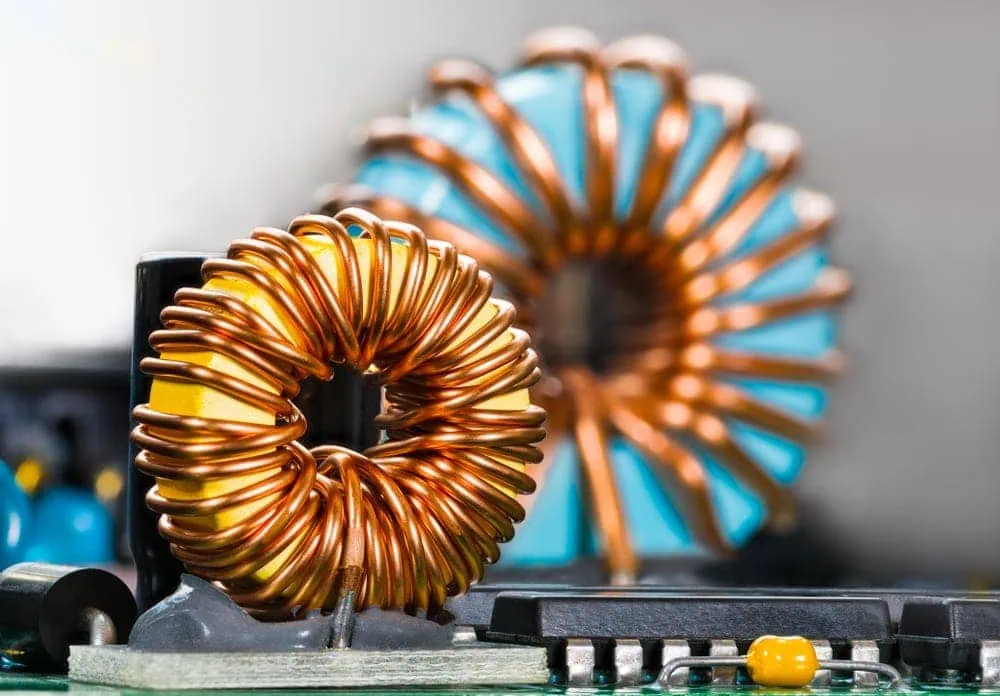
The concept of coupled inductors, or transformer coils, is fundamental in the field of electrical engineering. Coupled inductors are used to transfer energy from a primary circuit to a secondary circuit, allowing for efficient and reliable power transmutation while providing some unique advantages not seen with other power conversion methods. What is a Coupled Inductor…
Harnessing the Power of Resonant Inductors for Efficient Energy Conversion
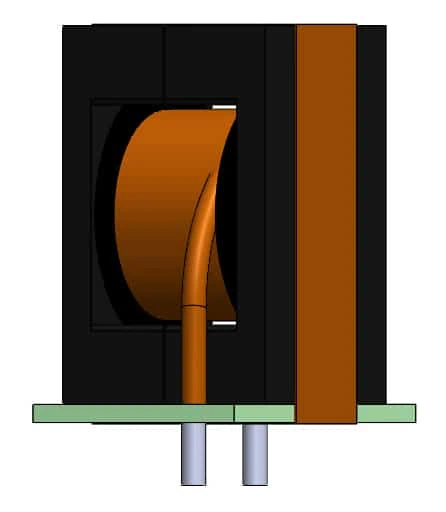
As energy efficiency becomes more important in modern electronics, resonant power conversion is becoming a prominent technique for minimizing energy loss in power electronics applications. The resonant inductor is an important component in resonant power conversion systems. The importance of resonant inductors in these systems and their application in zero voltage switching (ZVS) technology, which…
The Advantages and Disadvantages of LLC Transformers
LLC is one of many switch mode topologies for power supply and battery charging. The LLC transformer is critical in determining an LLC resonant converter’s efficiency. Resonant tanks are circuits comprised of inductors (L) and capacitors (C) that oscillate at a fixed frequency known as the resonant frequency. LLC transformers have two inductors and one…

Choke vs. Inductor: What’s the Difference?
Click to Expand At MPS Industries, we specialize in manufacturing high-quality magnetic parts for automotive, medical, power distribution, and more. We’re ISO 9001:2015 certified, and we prioritize quality engineering practices to create products our clients can trust in critical applications, including inductors and chokes. Both chokes and inductors can deliver and modify electrical current. However,…

How Do Common Mode Chokes Work?
A common mode choke is an electromagnetic component that blocks high frequencies by passing direct currents (DC) and alternating currents (AC) through an electrical circuit. The choke gets its name because it blocks or “chokes” high-frequency signals while low-frequency signals pass through. This blog will cover the various aspects of common mode chokes and address…